Gravel Driveways
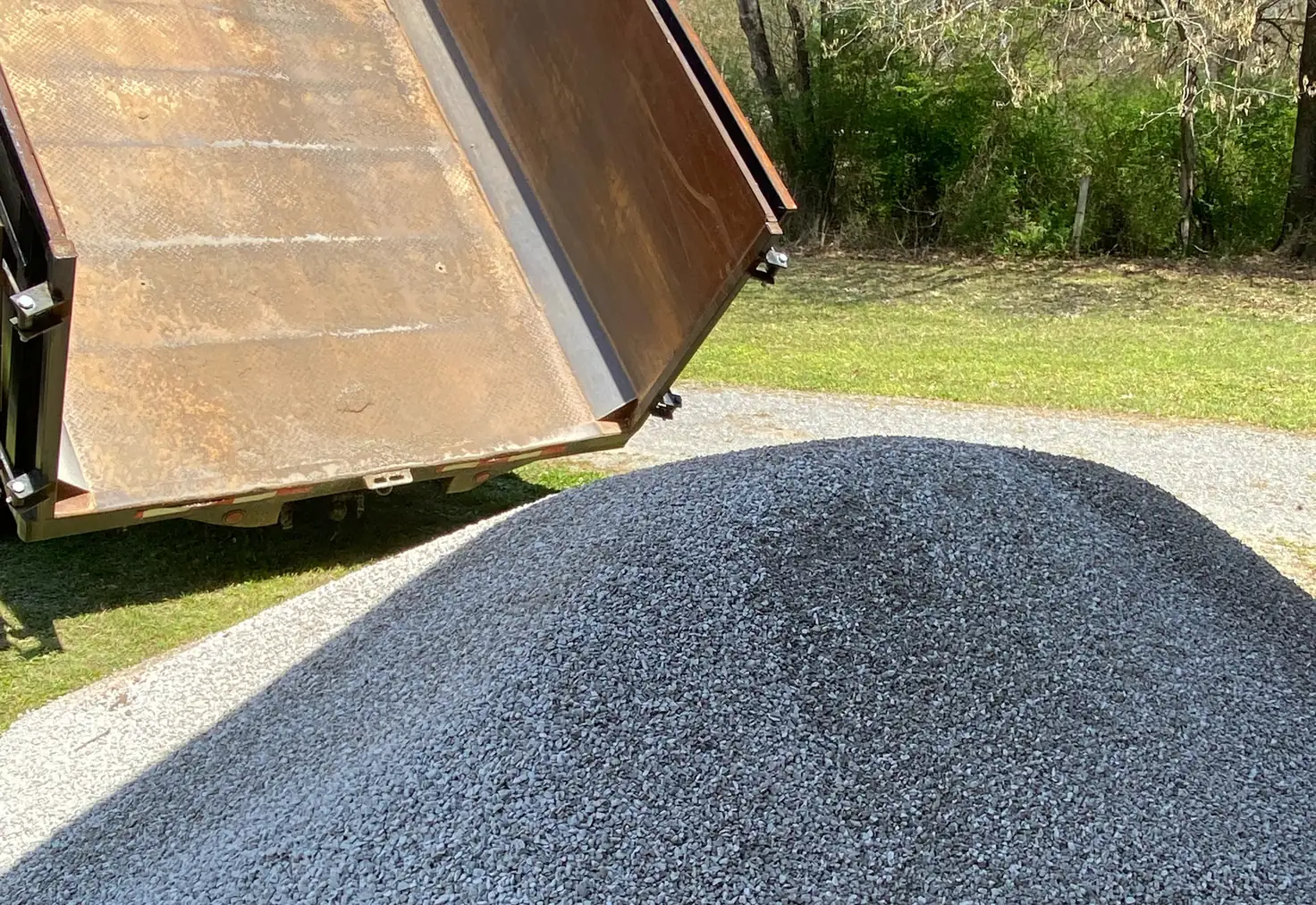
We build and rebuild gravel driveways, long rural drives and parking pads across northeast Louisiana. The base is cut and shaped first, then rock is hauled in our dump truck and spread.
Learn More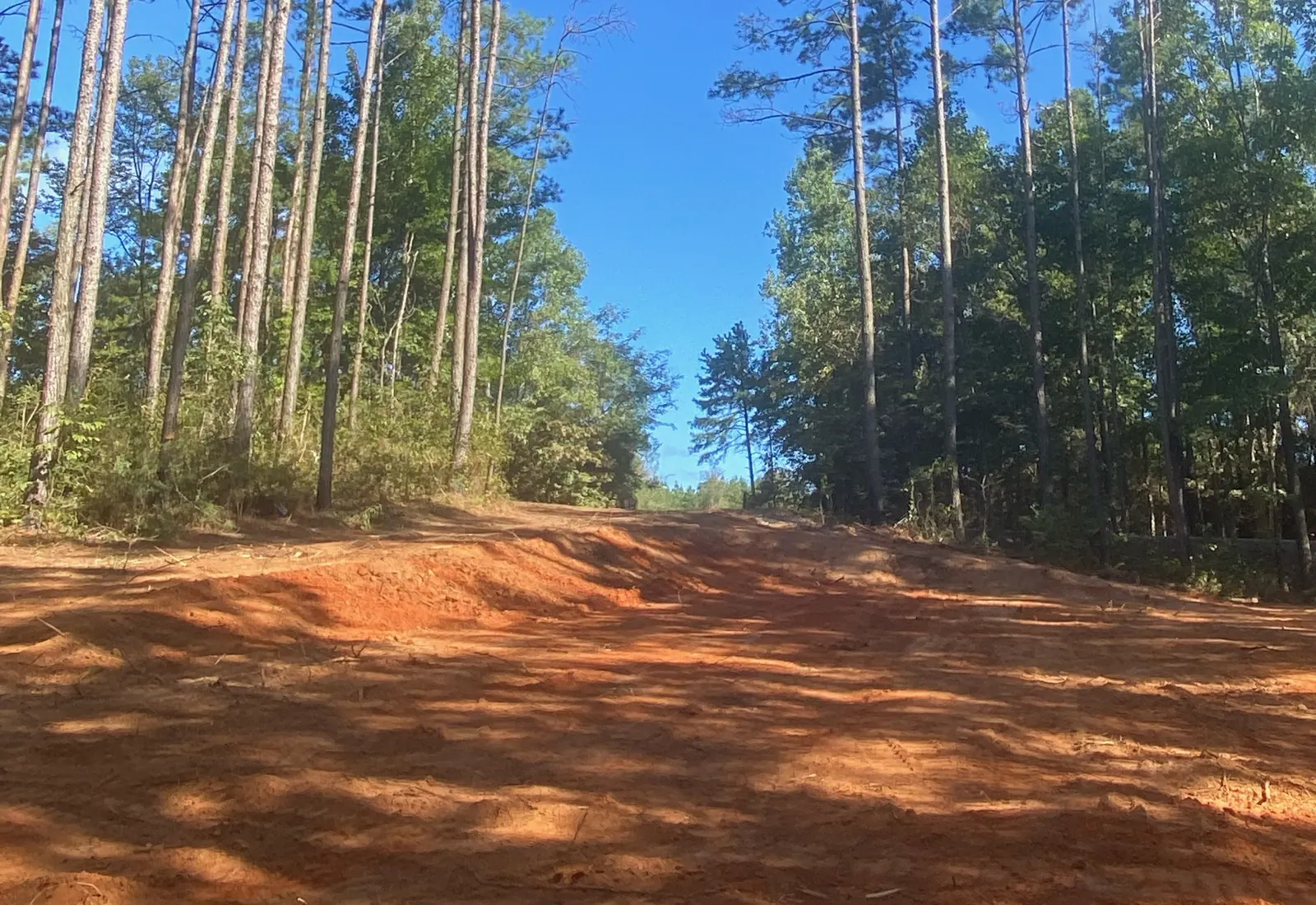
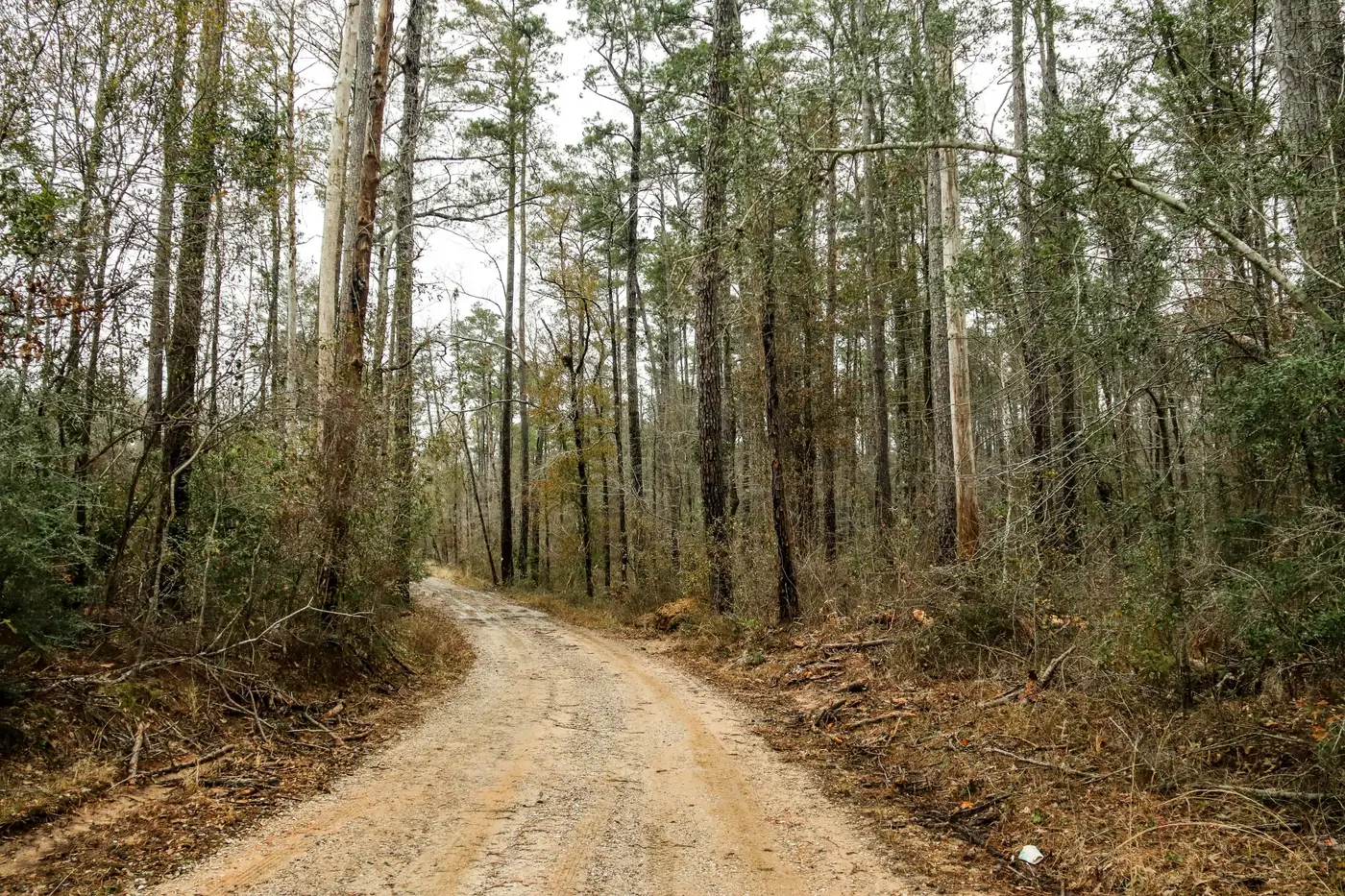
Private road construction is the work that gets a truck from your gate to the back of your land. Dupree's Dirt and Excavation is based in Bastrop and builds dirt and gravel roads on private land across northeast Louisiana. We cut new roads through tall pines and pasture to a home site, a camp, a barn or a pond. We also regrade and re-rock worn private roads, camp roads, farm roads and field roads.
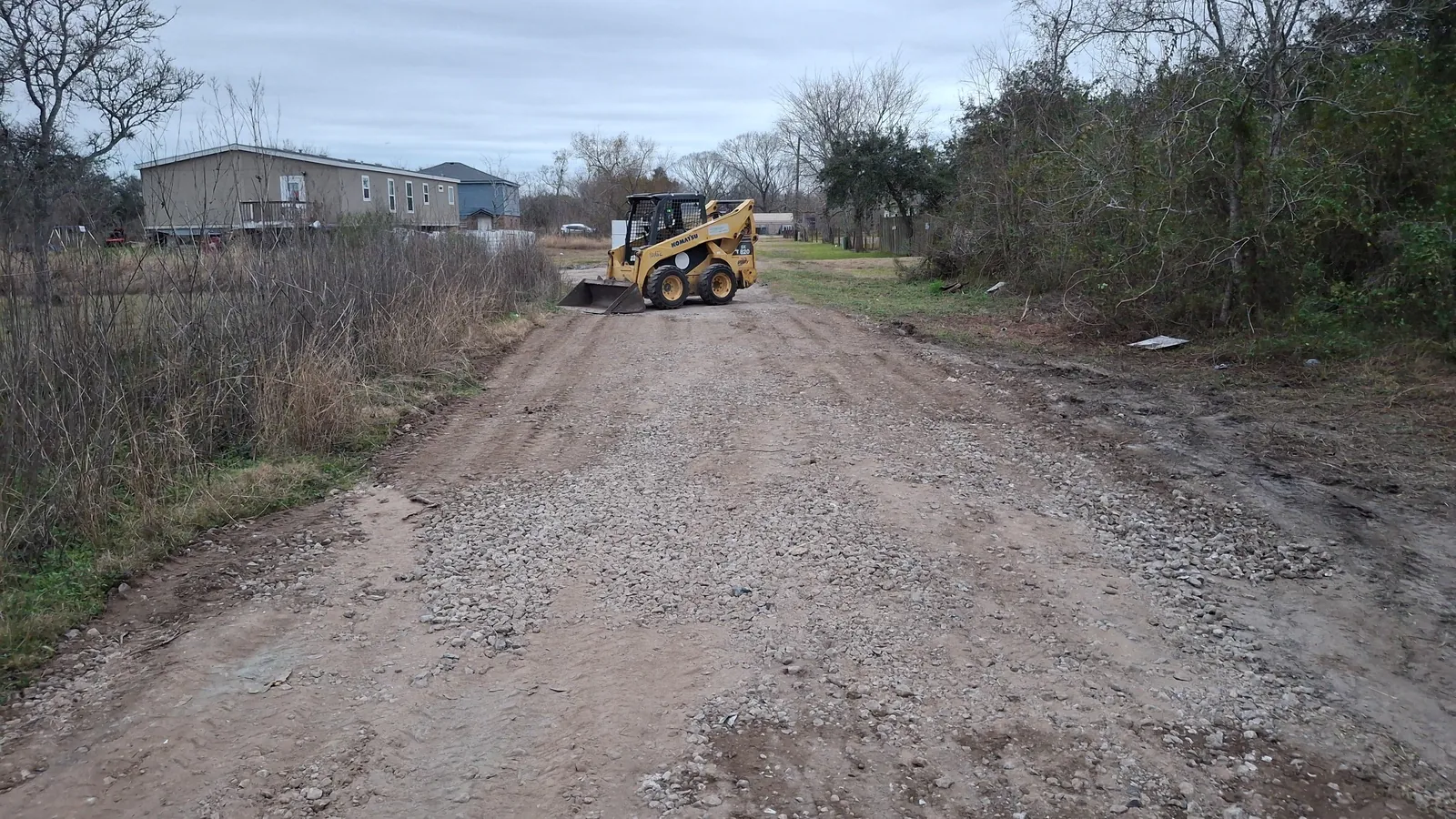
A new road starts when our excavator clears the route and pulls stumps out of the road bed. Then the bed is built up with dirt and shaped so the rain runs off. Rock comes in on our dump truck and gets spread with the skid steer. Near the house, the road turns into a gravel driveway and parking pad.
Tell us about the job. We will get right back to you.
Louisiana's forestry BMP manual comes from the Louisiana Forestry Association, LDEQ and LDAF. It says roads should follow ridges where they can, at grades between 2 and 10 percent. Stretches steeper than 10 percent should run no longer than 500 feet. The manual also says to keep roads out of spots where water tends to collect.
Our excavator pulls the stumps and roots out of the road bed once the route is cleared. The manual says stumps and other organic debris should not be buried under fill or built into a road bed. Buried wood rots and leaves a soft spot under the road. The bed is built up with dirt and packed, and the manual calls for road banks sloped 2:1.
The Federal Highway Administration's gravel roads guide recommends a crown that rises about 1/2 inch per foot. That is about 4 percent from the shoulder to the center, and never more than 6 percent. Where the grade and soil allow it, the BMP manual says to outslope the full width of the road. An outslope tilts the whole road toward the downhill side, so water runs straight off.
Many red clay ridges in Union, Lincoln and Webster parishes are Darley soil, formed in iron-rich, clayey marine sediments. It is loblolly pine country, and the NRCS soil survey puts Darley slopes at 1 to 30 percent. A road that rides the ridge top can stay inside the manual's grades on hills like that. On highly erodible soils, the manual wants grades of 8 percent or less.
Much of Morehouse Parish is Hebert soil on natural levees. It carries a seasonal high water table 1.5 to 3 feet down, December through April. Out in the backswamp, Perry clay drains very slowly. On ground like that, we build the road bed up higher than the land around it.
Private road repair starts with how the road wore out. The crown flattens and water sits in the ruts, then potholes open and the rock sinks into the clay. A road surface should stay crowned or outsloped so runoff leaves it. We regrade the road to bring that shape back, and fresh rock goes where the old rock has gone thin.
On camp roads and farm roads, soft stretches that pump mud get dug out and refilled. Low spots get built back up with rock and dirt by the load from our dump truck. Gravel on the surface helps keep a road stable.
The BMP manual also wants gravel where a haul road meets a highway, to keep mud off the highway. In Ouachita Parish, a culvert at a parish road starts with a permit from the parish permit office. Parish public works surveys the spot and tells the permit holder what size pipe it needs. In other parishes, ask the parish office before the road goes in.
Free estimates and site visits across Bastrop, Monroe and about 60 miles around.
(318) 614-2073From the first call to the final grade, here is how it goes.
Call (318) 614-2073 and tell us what the property needs. We ask a few questions about size, access and what you want at the end.
We come out and look at the ground, the access and where the water sits. Seeing it is the only way to price it right.
You get a price for the work and a plain list of what is included. The estimate is free.
Louisiana 811 is called before we dig, and any permit the job needs is sorted out first. Then the machines and the truck go to work.
The ground is graded back out and the debris is gone. We take a last look over it with you before we pull off.
Common questions about private roads across Bastrop, Monroe and about 60 miles around. If yours is not here, call and ask.
We build and rebuild gravel driveways, long rural drives and parking pads across northeast Louisiana. The base is cut and shaped first, then rock is hauled in our dump truck and spread.
Learn More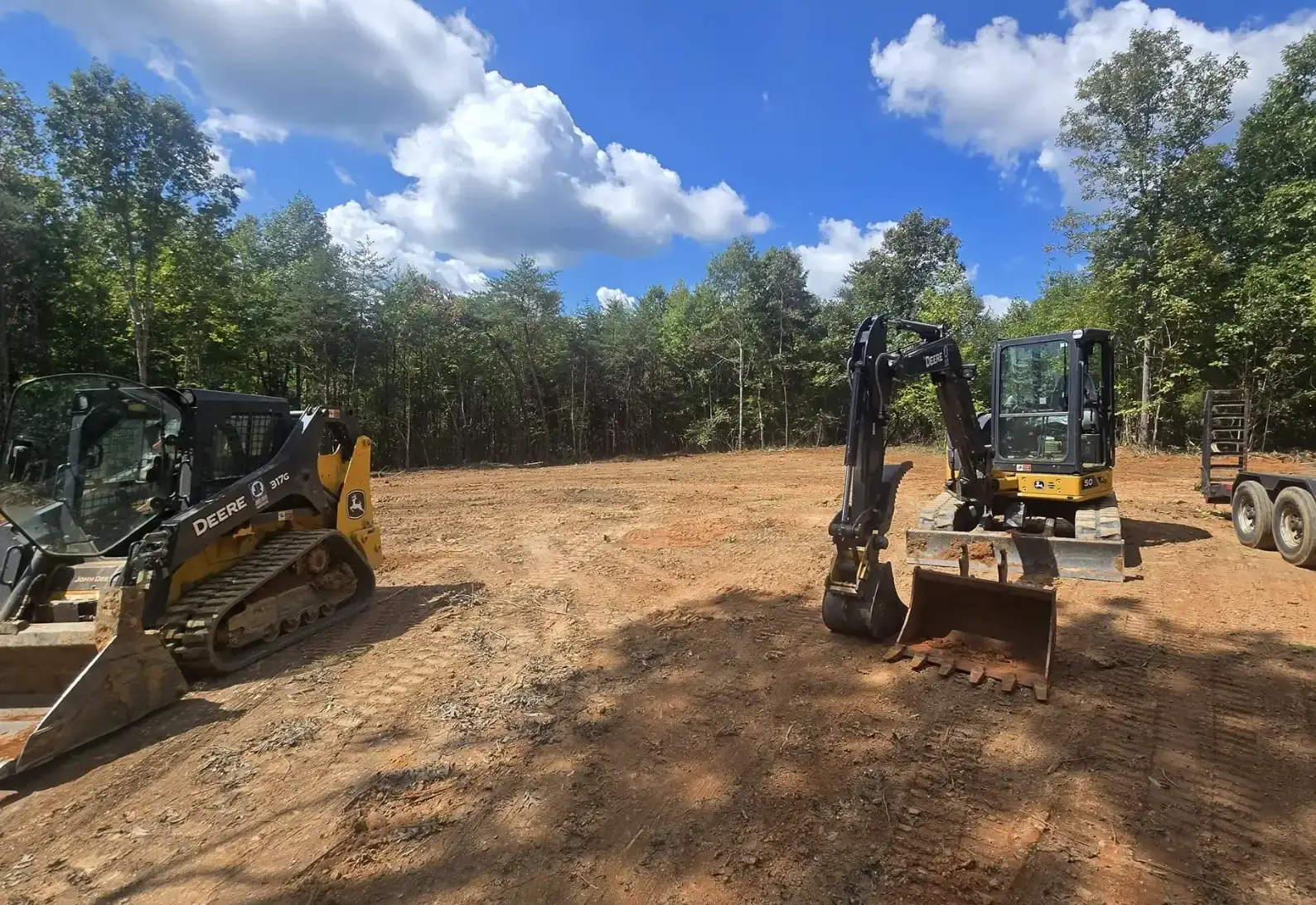
We clear lots, home sites, fence lines and grown-up acreage with the excavator and the skid steer. Stumps and root balls come out, the debris is hauled off, and the ground is smoothed back down.
Learn More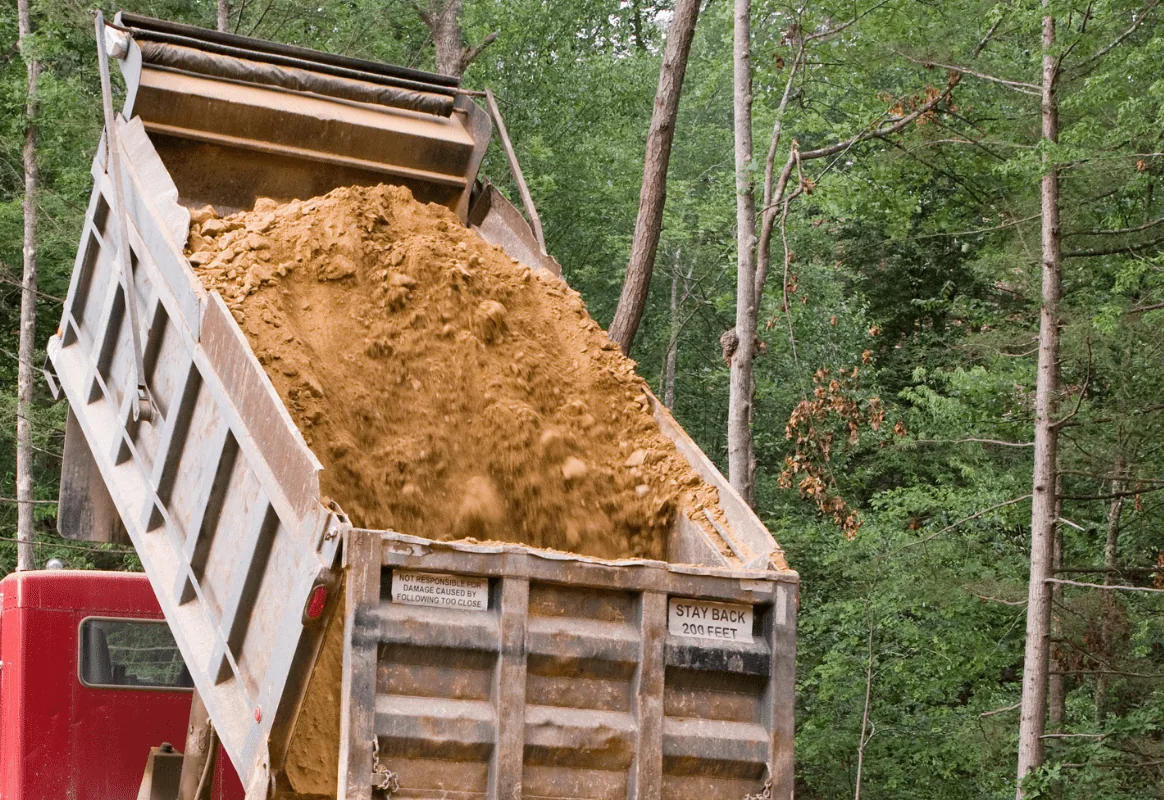
We haul fill dirt, select fill, topsoil, sand, gravel and crushed limestone by the load. It can be dumped where you want it or spread and graded with the skid steer.
Learn MoreWe are based in Bastrop and work northeast Louisiana, from Minden on the west side to Tallulah on the east.
The tracked excavator, the skid steer and the dump truck belong to us. Digging, grading and hauling all come from the same company.
Clearing, the pad, the drive and the final grade all run through us. You deal with the same company the whole way.
We come out and look at the ground before we put a price on it, and that visit is free.
Tell us where the property is and what you want done, and we will set a time to come look. Call (318) 614-2073, or fill out the form and we will get back to you.
Tell us about the job. We will get right back to you.