How much does it cost to build a pond in Louisiana?
A 2026 national cost guide puts the average cost to build a pond at $2,900 to $15,600. The same guide puts ponds under 10 acres at $3,000 to $15,000 per acre. A 1 acre pond lands in that same range. Those are market numbers, not our price list.
Pond construction cost comes down to the dirt: how much gets moved, and whether the ground holds water. LSU AgCenter’s pond rules for Louisiana move both. Some of them push a Louisiana pond under the national numbers, and some push it over.
What does a pond cost by size?
The same guide prices ponds by size. The last column is plain division.
| Pond size | National average installed cost | Works out per acre |
|---|---|---|
| 1/4 acre | $1,800 to $8,100 | $7,200 to $32,400 |
| 1/2 acre | $2,400 to $11,600 | $4,800 to $23,200 |
| 1 acre | $3,000 to $15,000 | $3,000 to $15,000 |
| 2 acres | $6,000 to $30,000 | $3,000 to $15,000 |
| 4 acres | $12,000 to $60,000 | $3,000 to $15,000 |
Below an acre, the price per acre climbs. The guide puts that down to the cost of moving equipment and material. A 10 acre lake drops to $1,200 to $6,800 per acre.
By type, the guide puts a farm pond at $3,000 to $23,000 and a fishing pond at $7,000 to $59,000. Each row is the same pond construction job at a different size. On a levee pond, the dirt dug out of the basin builds the levee.
How deep should a pond be, and what does depth cost?
The national guide describes farm ponds as 6 to 12 feet deep, and fishing ponds as 6 to 8 feet. LSU AgCenter’s pond publication sets a Louisiana target instead.
It calls for an average depth of at least 4 feet all year, with no part under 3 feet. Water deeper than 6 feet, it says, is generally of little use in Louisiana. That extra depth does not raise fish production.
Depth is where the dirt goes. An acre is 43,560 square feet, so one more foot across a flat acre is 43,560 cubic feet. That is about 1,613 cubic yards.
The guide prices large pond digging at $1.50 to $4.00 a cubic yard. So each foot runs about $2,400 to $6,450 per acre.
A fishing pond that stops where LSU AgCenter says depth stops paying leaves that dirt in the ground. Two fewer feet across an acre is about 3,200 fewer cubic yards. An irrigation pond is different math. LSU AgCenter says to store about 1.5 acre-feet for each acre you plan to irrigate.
Will the ground hold water?
The soil check comes first, because every cost after it depends on the answer. LSU AgCenter says pond soil needs about 25 percent clay or silt to seal. It says to check at least 2 feet below the planned bottom. Sand pockets and old stump holes can cause severe seepage.
Tight clay covers large parts of the Delta. The soil survey’s reference field for Sharkey clay sits near Tallulah, and that clay is very slowly permeable.
Sandy ground is where extra cost hides. The national guide says sandy soil may need clay-heavy soil added. LSU AgCenter says lighter soils may need a central clay core in the levee.
The guide puts a geotechnical soil report at $1,000 to $5,000. Call the local Natural Resources Conservation Service (NRCS) office first. LSU AgCenter sends pond builders to that office for soil types and spillway sizing.
What does clearing the pond site cost?
On a wooded site, clearing comes before any digging. LSU AgCenter says to clear the whole basin plus a strip at least 20 feet back from the water line. Wood buried in a levee rots over time and opens a path for water out of the pond.
That is land clearing work, priced by the acre. The national pond guide puts it at $1,200 to $8,000 per acre on a lightly wooded lot. A heavily wooded lot runs $7,000 and up per acre. Our post on land clearing cost per acre breaks those numbers down.
What does the levee add to the cost?
On level ground, LSU AgCenter says, ponds are often square or rectangular with levees on all sides. It wants fish pond levees at least 6 to 8 feet high. It sizes them 10 to 16 feet wide, room for vehicle traffic. Side slopes run between 3 to 1 and 5 to 1.
Every one of those numbers is dirt. Take a levee 8 feet high with a 12 foot top. With 3 to 1 sides it holds about 10.7 cubic yards per foot of length. Lay the sides back to 5 to 1 and that grows to about 15.4.
Settling adds more. LSU AgCenter says a levee may need 15 to 20 percent more height for settling. How much depends on how well the dirt was packed. The AgCenter calls for compaction over the whole water-holding area, with a sheep’s-foot roller or a heavy tractor.
What else goes into the price?
The spillway is part of the bill. LSU AgCenter’s rule of thumb makes an excavated spillway at least 10 percent as wide as the levee is long. A 400 foot levee gets a spillway at least 40 feet wide.
Levee ponds also need a drain pipe through the levee at the lowest point. The AgCenter’s design puts concrete collars on that pipe every 12 feet. The pipe runs at least 2 feet past the toe of the levee on both sides.
The watershed above the pond matters too. LSU AgCenter says it usually runs 5 to 20 times the pond’s surface acreage. An oversized one, it warns, increases the levee size and the construction cost.
Will a permit add to the cost?
LA DOTD draws the state’s dam line. Its rule sends any barrier 6 feet or taller that stores 15 acre-feet or more to DOTD for review. An acre-foot is one acre covered a foot deep. A 1 acre pond averaging 6 feet deep holds about 6 acre-feet, well under that line.
A bigger pond behind a taller levee can cross it, and then the plans go to DOTD for review. A dam that falls under the state program needs DOTD’s written approval before construction starts. The approval can be shorter when a pond meets NRCS Pond Standard 378 and NRCS engineers design and inspect it.
A federal permit is a separate question. Section 404 of the Clean Water Act covers fill placed in waters of the United States. A pond that dams a drain or fills a wetland can bring it in. The Corps of Engineers makes that call.
What will a pond cost on your land?
A pond price is a dirt count made on the ground. Dupree’s Dirt and Excavation is based in Bastrop. We dig farm ponds, fishing ponds, stock ponds and duck water across northeast Louisiana.
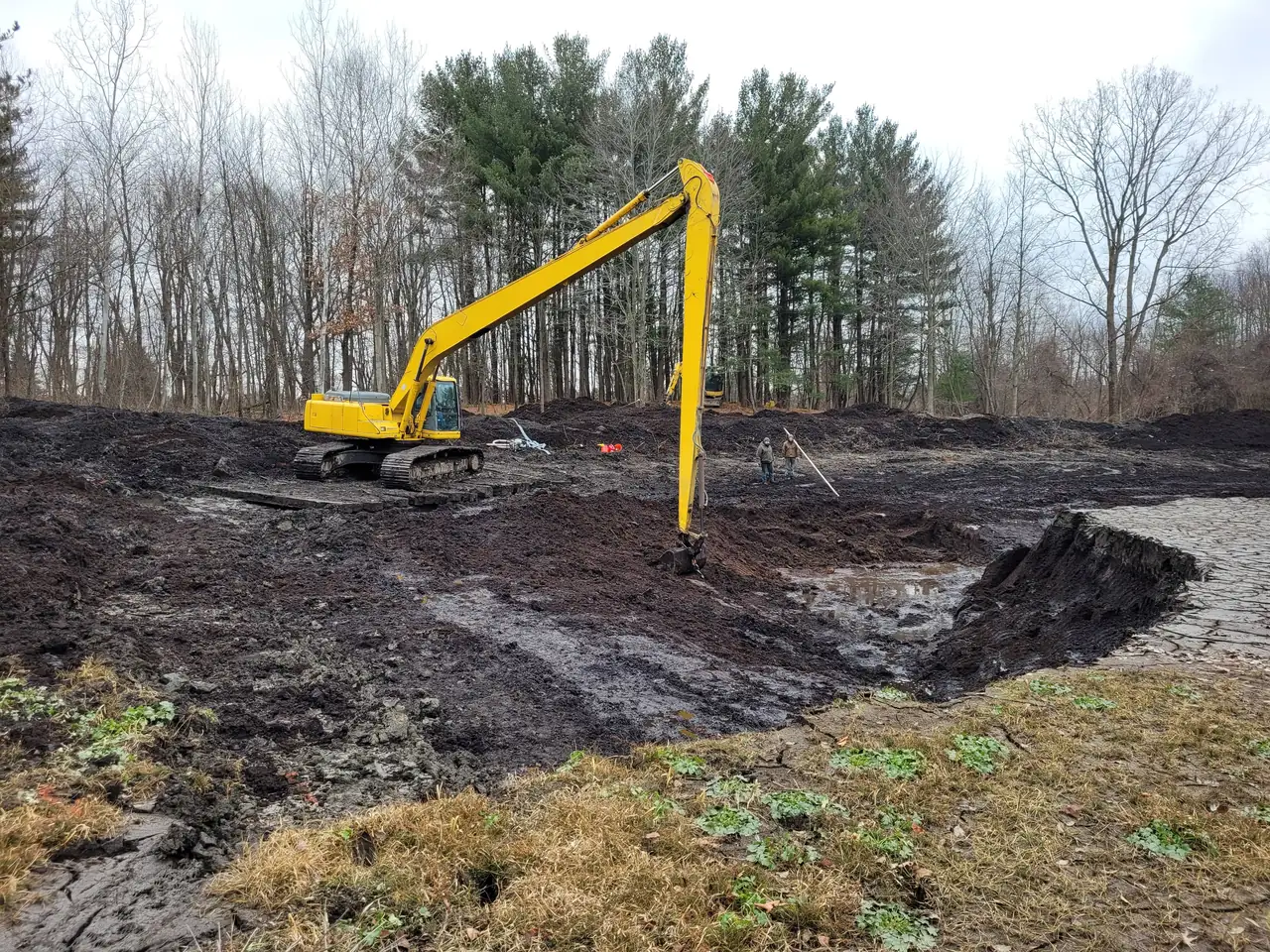
We look at the site for clay and the watershed above it before we price anything. Old silted ponds get cleaned out and deepened with our excavator, part of our excavation work.
The estimate is free. Call (318) 614-2073, and read how we build a pond for the full job.